
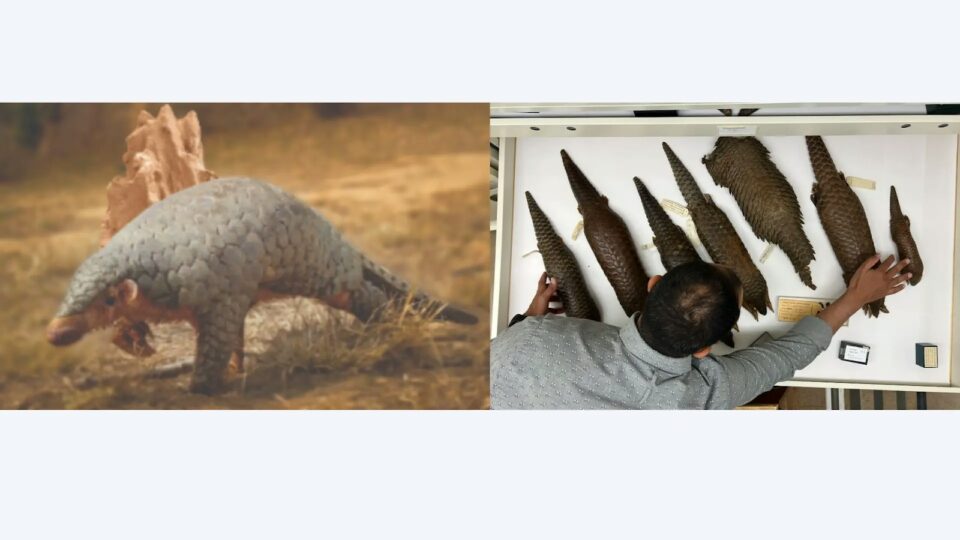
Chicago scientists are giving one of the world’s most extraordinary animals a fighting chance. Researchers at the Field Museum have completed a new analysis of pangolin DNA and rebuilt the animal’s family tree, a breakthrough that could help protect the world’s most-trafficked mammal from poaching.
Imagine an anteater with a long, thick tail, huge curling claws, and armor of overlapping, pinecone-like scales: that is the pangolin, a gentle mid-sized mammal found only in Africa and Asia. Its unique scales have made it a target of illegal trafficking, pushing several species toward danger.
By studying specimens in the Museum’s collections, including the newly recognized species Manis aurita, the team untangled the pangolins’ evolutionary relationships. Knowing exactly how the species are related helps conservationists set smarter priorities for protecting them in the wild.
It is science with a mission: decoding the past to safeguard the future of one of nature’s most remarkable creatures.
Photo: Field Museum