
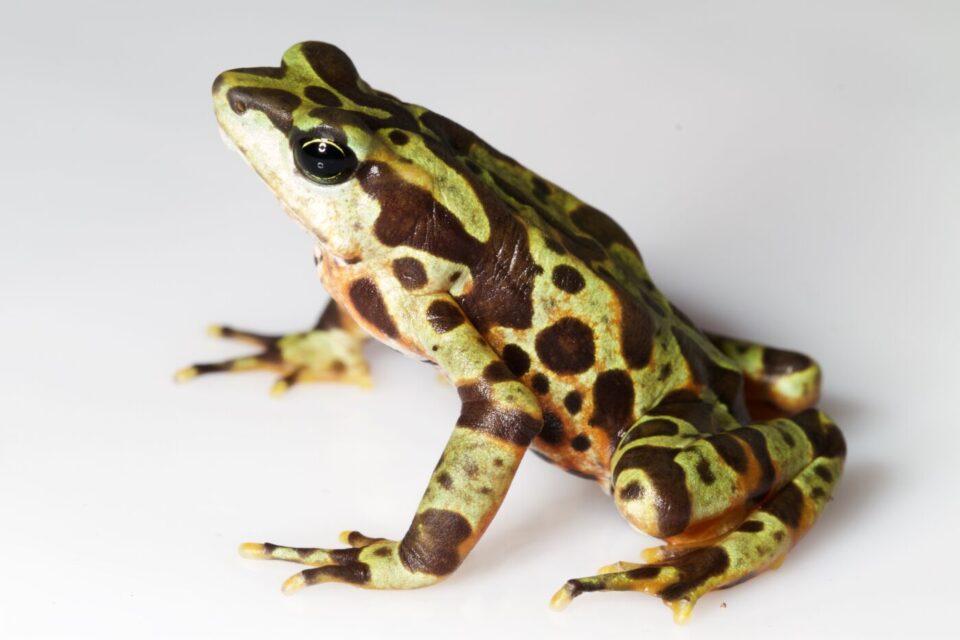
Great news for frogs! Scientists from the Smithsonian’s National Zoo and Conservation Biology Institute have discovered a hopeful new path to bring some of the world’s most endangered amphibians back to the wild.
In new research published in the Journal for Nature Conservation, the team identified climate refuges in Panama: special places where a deadly frog-killing fungus simply cannot thrive. While the chytrid fungus has devastated wild frog populations across Central and South America for decades, the study shows that the disease behaves a lot like the human flu – it surges in some conditions and fades in others.
Using that insight, researchers mapped where the fungus is least dangerous, giving conservationists a ranking of the safest spots to release captive-bred harlequin toads. These colorful little stream frogs have been pushed to the brink of extinction, and survey teams are already using the new maps to scout real release sites.
There is even more hope: the variable harlequin toad may have developed natural resistance to the disease, and the models also point to hidden places where wild toad populations may still be hanging on.
For the team at the National Zoo, whose conservation scientists work around the world to save wildlife, these maps turn years of painstaking research into real action for Panama’s frogs.
Photo: Brian Gratwicke, Smithsonian’s National Zoo and Conservation Biology Institute.