
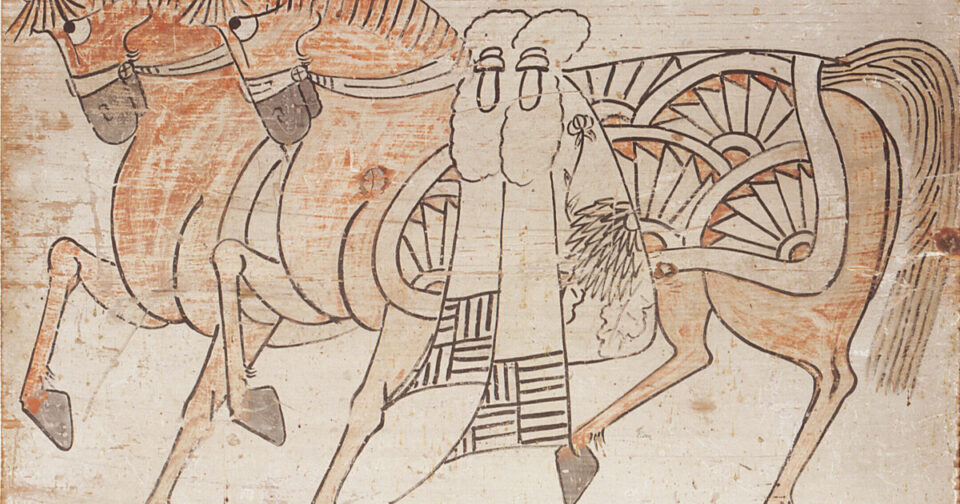
A centuries-old tradition of hope, color and humor has arrived in Balboa Park. Painted Prayers: The Japanese Folk Art Tradition of Ema is now on view at Mingei International Museum through April 4, 2027, and it is the first museum exhibition in the United States to present such an extensive and varied display of ema, large and small, from the 18th century to today.
Ema are house-shaped wooden votive plaques offered as prayers at Japan’s Shinto shrines and Buddhist temples. Most are small and hand-painted with images of deities, animals or objects, carrying wishes as general as good fortune for the coming year or as specific — and charming — as the removal of warts. For centuries, worshippers have inscribed their plaques with heartfelt prayers and hung them on wooden stands outside shrine and temple halls, hoping the gods will read them before the plaques are ritually burned at year’s end.
Curated by Japanese art historian Meher McArthur, the exhibition traces the history of this religious painting tradition, explains the different uses of large and small ema, and introduces the many categories of images and the prayers tied to each — including some very surprising visual puns. The banner image, a painted horse plaque from around 1840–1870, comes from the museum’s own collection, a gift of Keisuke Serizawa.
It is a joyful, quietly moving show: hundreds of small wooden wishes, painted with love, gathered under one roof in San Diego.
Photo: Mingei International Museum